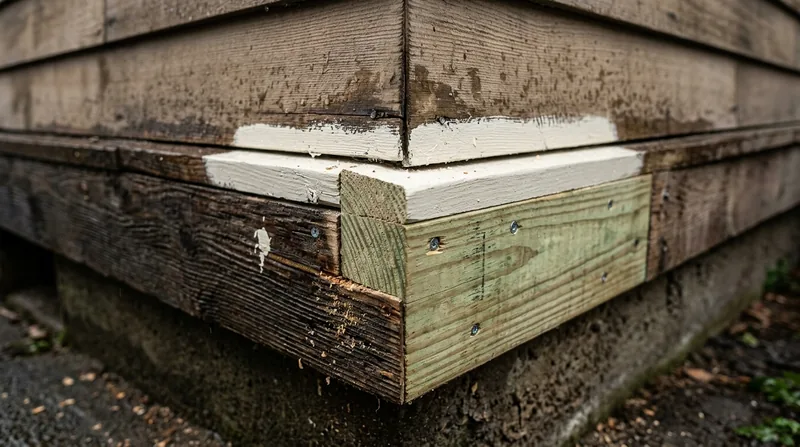




Wood Rot & Dry Rot Repair in Tacoma is a structural necessity, not a cosmetic fix. Tacoma's homes, especially the Victorian and Craftsman stock built across the North Slope Historic District and Stadium District between 1888 and 1929, sit under constant moisture pressure from the Puget Sound marine climate. Heavy fall-through-spring rainfall, damp winters, and limited winter sun create ideal conditions for dry rot to colonize Douglas fir and western red cedar framing, siding, and trim. Left untreated, rot spreads through floor joists, sill plates, and rim joists, weakening structural capacity and opening pathways to further water intrusion. We cut out decayed wood, treat the surrounding framing, and rebuild with rot-resistant lumber. This is a permanent repair, not a cosmetic patch. If you're seeing soft spots in trim, discolored siding, or springy floors, a free estimate is the right first step.
Why Wood Rot & Dry Rot Repair Matters in Tacoma's Climate
Tacoma's position on the bluffs above Commencement Bay and the Puget Sound creates a marine microclimate where moisture is constant and winter sun is scarce. Homes in neighborhoods like Proctor District, Old Town Tacoma, and the postwar rambler zones across South Tacoma all share the same enemy: persistent dampness that feeds dry rot fungus. Unlike termite damage, which advances visibly and rapidly, dry rot is silent. It can hollow out the interior of a joist or stud while the exterior appears sound, then fail suddenly under load. The longer rot sits, the more framing it consumes and the higher the repair cost climbs.
- We identify rot in floor joists, subfloor, rim joists, sill plates, and exterior trim before structural failure occurs.
- We cut out all decayed wood and 6 inches of sound wood beyond the visible decay to ensure no fungal spores remain.
- We treat the surrounding framing with a borate solution to prevent new rot from taking hold.
- We rebuild with pressure-treated lumber or naturally rot-resistant species suited to the repair location.
- We document the work in writing so you have a record for insurance claims or future sales.
Addressing rot early saves money and prevents structural compromise that would require costly beam replacement or floor joist sistering later.
Key info: Tacoma's marine climate means dry rot is a year-round threat. The North Slope Historic District, Stadium District, and Proctor District homes built before 1930 are especially vulnerable because their original Douglas fir framing lacks modern moisture barriers. We see rot in rim joists and sill plates within 15 miles of Commencement Bay more often than in inland neighborhoods.
For more on related structural damage, see our page on Floor Joist & Subfloor Repair.
How We Repair Wood Rot & Dry Rot in Tacoma Homes
Our process begins with a detailed inspection to map the extent of decay. We probe suspected areas with a screwdriver or awl, looking for soft or punky wood. Once we confirm rot, we cut it out completely, working back to sound framing on all sides. We then treat the exposed sound wood with a fungicide, let it dry, and rebuild with appropriate lumber. The goal is a repair that lasts as long as the original structure, not a patch that fails again in five years.
- We start with a free visual inspection and probe testing to determine rot depth and spread.
- We remove all decayed wood and 6 inches of sound framing beyond the decay line.
- We apply a borate-based fungicide to the exposed wood and allow it to dry thoroughly.
- We cut and fit replacement lumber to match the original member size and fastening pattern.
- We reinstall any siding, trim, or interior finishes that were removed during the repair.
The timeline depends on rot location and extent, but most single-area repairs take one to three days. Larger jobs affecting multiple joists or structural members may require a week or more.
Real example: A 1920s Craftsman bungalow in the Stadium District near Wright Park had rot in the rim joist where the exterior siding met the foundation. Water was wicking up the siding and into the framing. We removed 4 linear feet of rim joist, treated the adjacent band board, and installed pressure-treated replacement lumber with new flashing. Total time: two days. Cost: well under the price of replacing the entire subfloor.
Learn more about our broader structural carpentry approach on our Framing & Structural Carpentry page.
Methods and Approaches
| Approach | Description | Best for |
|---|---|---|
| Localized decay removal and replacement | Cut out rot, treat sound wood, install pressure-treated or rot-resistant lumber to match original member. | Rot confined to one joist, rim joist, sill plate, or trim board. |
| Sister joist reinforcement | Install a new joist alongside a weakened or partially decayed joist, fastened with bolts and nails to share the load. | Rot affecting 40 to 60 percent of joist depth or span when removal would weaken the floor too much. |
| Full joist or beam replacement | Remove decayed member entirely, install new lumber of same or greater size, bearing on the same posts or walls. | Rot affecting more than 60 percent of member depth or where structural load cannot be shared. |
| Exterior trim and siding repair | Remove rotted fascia, soffit, siding, or casing, treat adjacent wood, install new exterior-grade lumber with proper flashing and drainage. | Rot in fascia, soffit, exterior trim, or siding where water intrusion is the root cause. |
| Moisture management and sealing | Install or repair flashing, caulk gaps, apply water-resistant sealant to exposed wood, improve drainage around foundation. | Preventing new rot from forming after repair or stopping active moisture intrusion feeding existing decay. |
Wood Rot & Dry Rot Repair Cost in Tacoma: What to Expect
The cost of wood rot and dry rot repair in Tacoma depends on three main factors: the location of the decay (accessible or hidden), the amount of wood that must be removed and replaced, and whether the repair requires sistering or full member replacement. A single rotted fascia board or sill plate section might cost $650 to $1,200. A full floor joist replacement or extensive subfloor repair can run $2,500 to $5,000 or more. The best way to know is to get a free estimate from a carpenter who will visit the site, probe the decay, and explain what must come out and what must go back in.
We recommend getting two or three estimates from local contractors. Compare not just the price but the scope: what wood is being removed, how much is being treated versus replaced, and whether the repair includes moisture management to stop new rot from forming. A cheap estimate that ignores flashing or drainage will fail again within a few years.
For detailed pricing on all our services, visit our pricing page. Call us at (253) 322-2881 for a free estimate within 24 hours.
Wood Rot & Dry Rot Repair Near Me: What Tacoma Homeowners Should Know When Hiring
When you're looking for a carpenter to repair wood rot in Tacoma, Lakewood, Puyallup, or any of the surrounding neighborhoods, focus on three things: whether the contractor is fully insured and can document that coverage, whether they explain the pathology and the repair method in plain language, and whether they give you a written estimate before starting work. Ask for references from recent jobs, especially repairs in older homes like yours. If your home is in a historic district like the North Slope Historic District or Stadium District, check with your local building department about whether permits are required for structural repair work, though most rot removal and replacement falls outside the permitting threshold.
- Verify that the contractor carries liability and workers compensation insurance and can provide a certificate on request.
- Ask the contractor to explain what wood is rotted, why it rotted, and what will be done to prevent it from happening again.
- Request a written estimate that lists the wood to be removed, the wood to be installed, and the labor and materials cost.
- Check references from at least two recent jobs, preferably in homes similar to yours or in your neighborhood.
- If your home is in a historic district or HOA, confirm that the repair method and materials meet any design or architectural guidelines.
A good contractor will walk you through the repair, answer your questions, and stand behind the work with a warranty. Get in touch with us to schedule your free inspection at our contact page or call (253) 322-2881.
Wood Rot & Dry Rot Repair in Tacoma: Pricing Guide
| Service | Price | Details |
|---|---|---|
| Single board or trim repair (fascia, siding, trim casing) | Starting at $650 | Includes removal of rotted board, treatment of adjacent framing, and installation of replacement lumber with flashing |
| Rim joist or sill plate repair (4 to 8 linear feet) | Starting at $1,200 | Includes removal of decayed section, fungicide treatment of sound wood, and pressure-treated replacement with new flashing |
| Floor joist repair or sistering (single joist) | Starting at $1,800 | Includes removal of rotted section or full joist replacement, treatment, and installation of new pressure-treated lumber |
| Subfloor or multiple joist repair (extensive damage) | On estimate | Complex jobs affecting multiple members or large areas require on-site inspection to determine scope and structural needs |
| Travel | Included | No separate mileage or call-out fee within Tacoma and surrounding service areas |
| Free estimate | Free | Response within 24 hours at (253) 322-2881, includes visual inspection and written scope, no obligation to book |
Indicative pricing, the exact cost depends on square footage, finish, and site access. Free personalized estimate within 24h at (253) 322-2881.


